
Iron is something most of us have heard of, but unless you've ever been told you're anaemic, you've probably not given it much thought.
The reality is that iron plays a vital role in almost every part of the body. Without it, we wouldn't be able to transport oxygen around the body, produce energy efficiently or support healthy immune function.
But when it comes to gut health and IBS, iron has a more complicated story...
What is iron and why do we need it?
Iron is an essential mineral that helps your body make haemoglobin, the protein found in red blood cells that carries oxygen around your body.
Think of iron as part of your body's delivery service. Without enough of it, oxygen struggles to get where it needs to go.
This can lead to symptoms such as:
- Fatigue
- Weakness
- Dizziness
- Brain fog
- Shortness of breath
- Pale skin
- Headaches
In short, iron is something your body cannot function properly without.
What happens if you don't have enough iron?
Low iron levels can eventually lead to iron deficiency anaemia.
This occurs when your body doesn't have enough healthy red blood cells to carry oxygen efficiently.
Iron deficiency can happen for a variety of reasons, including:
- Heavy menstrual bleeding
- Pregnancy
- Coeliac disease
- Inflammatory bowel disease (IBD)
- Poor dietary intake
- Reduced absorption from the gut
- Long-term digestive issues
If you suspect you may have low iron levels, it's important to speak to your GP before starting supplements. A simple blood test can help identify whether iron deficiency is present.
Can you have too much iron in the gut?
Surprisingly, yes.
Iron is essential for us, but many bacteria also need iron to survive.
The problem is that not all gut bacteria use iron in the same way.
Many beneficial bacteria are adapted to relatively low-iron environments. However, some less helpful bacteria thrive when excess iron is available.
When large amounts of free iron are present in the gut, it can:
- Disrupt the balance of gut bacteria
- Increase bloating
- Increase gas production
- Contribute to digestive discomfort
- Promote inflammation
This is one reason some people notice worsening gut symptoms when taking iron supplements.
Why does stress affect iron levels in the gut?
This is where things get particularly interesting.
When the body is under stress or dealing with inflammation, it changes how it handles iron.
A hormone called hepcidin reduces the amount of iron absorbed from food. As a result, more iron remains within cells lining the gut.
As these cells naturally shed, iron is released into the gut.
At the same time, stress hormones alter how iron is stored and transported around the body.
The result?
More iron can end up passing through the gut, creating an environment that may favour less helpful bacteria.
This is one of the reasons stress and IBS symptoms can often go hand in hand.
Why does this matter for people with IBS?
People with IBS often experience periods of inflammation, stress and changes in gut function.
During flare-ups, the gut environment becomes more challenging:
- Gut bacteria become less balanced
- Gut sensitivity increases
- Digestion becomes less efficient
- Iron availability in the gut can increase
For some people, this combination may contribute to symptoms such as:
- Bloating
- Abdominal pain
- Urgency
- Diarrhoea
- Constipation
This is one reason researchers are becoming increasingly interested in the relationship between iron, the microbiome and IBS symptoms.
Can iron supplements make IBS symptoms worse?
For some people, yes.
Common side effects of iron supplements include:
- Constipation
- Stomach cramps
- Nausea
- Bloating
- Changes in bowel habits
Not everyone experiences these side effects, but they can be particularly challenging for people who already have a sensitive digestive system.
How can you safely take iron if you have both IBS and anaemia?
If you have been diagnosed with iron deficiency anaemia, iron supplements may be essential for your health.
However, there are ways to make them easier on your gut:
Speak to your GP
Different forms of iron are available and some may be better tolerated than others.
Start slowly
Some people find it easier to gradually increase their dose rather than taking a high-strength supplement immediately.
Take iron as directed
Some supplements are better absorbed on an empty stomach, while others may need to be taken with food to reduce digestive side effects.
Always follow the advice provided by your healthcare professional.
Focus on iron-rich foods
Iron-rich foods include:
- Lean red meat
- Poultry
- Fish
- Eggs
- Lentils
- Tofu
- Spinach
- Fortified cereals
Pairing these foods with vitamin C sources such as berries, citrus fruits or peppers can help improve absorption.
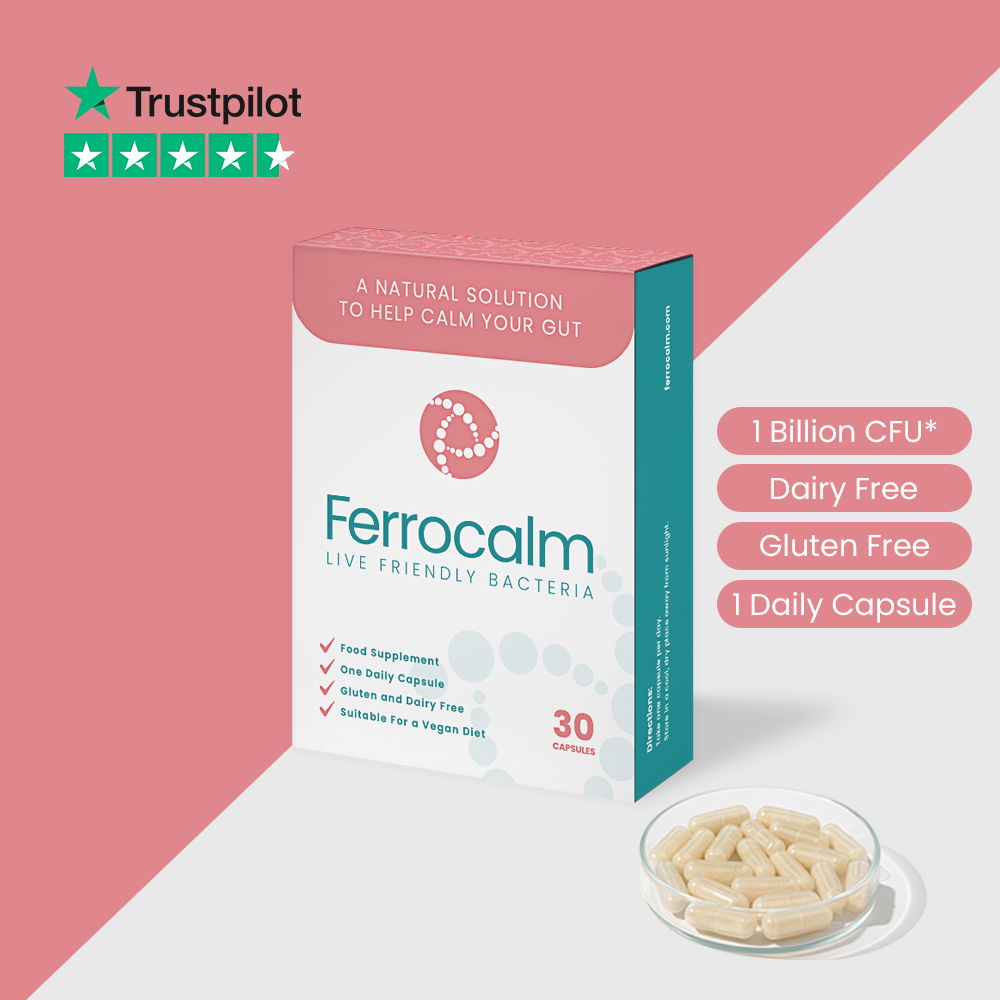
Take Ferrocalm!
Yes, we may be biased, but! Bare with us. Founder and scientist behind Ferrocalm,
Dr Jenny Bailey Cooper struggled with both IBS and anemia and, in her own words...
Ah yes, that's a tricky one! That's been my problem and being completely honest, the only solution I've found has been taking Ferrocalm alongside iron! We can make a couple of other suggestions:
1. Some forms of iron are better tolerated than others. Iron bisglycinate, ferric maltol, or other newer formulations are generally better tolerated.
2. Start off with a low dose, or take it every other day.
3. Take it with food
For people living with IBS, understanding this relationship helps explain why flare-ups can sometimes feel more complex than simply reacting to a particular food.
Gut health is influenced by stress, inflammation, bacteria, diet and even how our bodies handle essential nutrients like iron.
That's why supporting the gut isn't always about removing foods or following the latest trend. Often, it's about understanding what's happening beneath the surface and building a consistent, evidence-based approach that supports your gut in the real world.