
The Inside Story: Nicky’s Gut Health Journey With Diverticular Disease.
When it comes to gut health, no two stories are exactly the same.
For some people, symptoms build slowly over time. For others, everything changes after one frightening flare-up. For Nicky, a long-standing sensitivity to gluten and “a touch of IBS” became something much more serious three years ago, when she was diagnosed with diverticulosis after a severe flare.
This is Nicky’s inside story, in her own words.
Meet Nicky
Nicky is 56 and she lives in Bristol.
She runs a corporate training company, a publishing house and a holistic membership under the Discover Your Bounce brand...so a busy lady! Alongside work, she has become more focused on fitness and nutrition in her 40s and 50s, with ballet, Dancefit classes, swimming and gym sessions.
“I love to travel too, spending a lot of time combining work and exploring,”
But behind that busy, active life, Nicky has also had to learn how to manage a serious gut condition.
When gut symptoms became something more serious...
Nicky had always had some digestive sensitivity: “I’ve always had a touch of IBS and been intolerant to too much gluten,” she explains.
But three years ago, she was diagnosed with diverticulosis, a condition where small pockets develop in the colon. These pockets can sometimes trap food and become inflamed or infected, leading to diverticulitis.
For Nicky, the diagnosis came after a frightening flare-up.
“I had been feeling unwell for a couple of weeks, my pulse was high and I just felt off. I had been getting tummy pain too but didn’t connect the two.”
Then one afternoon, things escalated.
“I started to feel very unwell and had heart attack symptoms, pains in my chest and down my arm and through my jaw. My husband had to drive me to hospital as it would be quicker than an ambulance.”
At hospital, doctors ruled out a heart attack, but it was clear something was wrong.
“As I got on the bed I winced when I raised my leg due to tummy pain, and the doctor then focused on that. A CT scan revealed a diverticular pocket and I was put on antibiotics.”
Learning that food could no longer be an afterthought
After diagnosis, Nicky had to become much more aware of her triggers.
“I’ve had to be really inquisitive about what my triggers are, as it’s different for everyone,” she says. “In the early days I really felt like food was my enemy and lost quite a bit of weight as I worried about more flares.”
That fear was understandable. Severe diverticulitis can become very serious, and for Nicky, the wrong food can have real consequences.
“For me it’s leafy green vegetables, one flare-up was after a rocket salad,” she says. “To start with I avoided red meat but I have introduced a small amount back into my diet. But nuts and seeds are a no, pork still causes tummy upset, cow’s milk gives me pain and carbs cause tummy pain too, even gluten-free ones.”
Over time, she has found a way of eating that works better for her.
“I eat lean meat, fish, lots of cooked vegetables and fruit. I drink very rarely, have mostly decaf tea and coffee and a lot of water.”
The social side of living with a gut condition
One of the hardest parts of living with a digestive condition can be the way it affects normal life: eating out, travelling, working, socialising and feeling confident around food.
Nicky admits she can sometimes feel awkward asking for adjustments.
“I do sometimes feel like I’m making a fuss when I go out with friends or travel,” she says.
But one comment from a chef helped reframe things.
“As a chef said to me once: ‘This isn’t being fussy, this is a serious health issue for you!’ I have to remember that, the wrong thing can literally put me in hospital.”
Even when a full flare does not happen, Nicky can still experience painful bloating, tummy pain and more frequent trips to the bathroom.
“This can affect work too, and sometimes I have no clue what has caused it. Stress plays a part too, so it may not even be something I’ve eaten.”
That uncertainty is something many people with gut health conditions will recognise. It is not always as simple as one food, one trigger, one answer.
Finding a routine that supports her
Before trying Ferrocalm, Nicky had tried a range of supplements over the years, with varying levels of success.
She had first heard about Ferrocalm through Future Space in Bristol, where she had previously run wellbeing workshops.
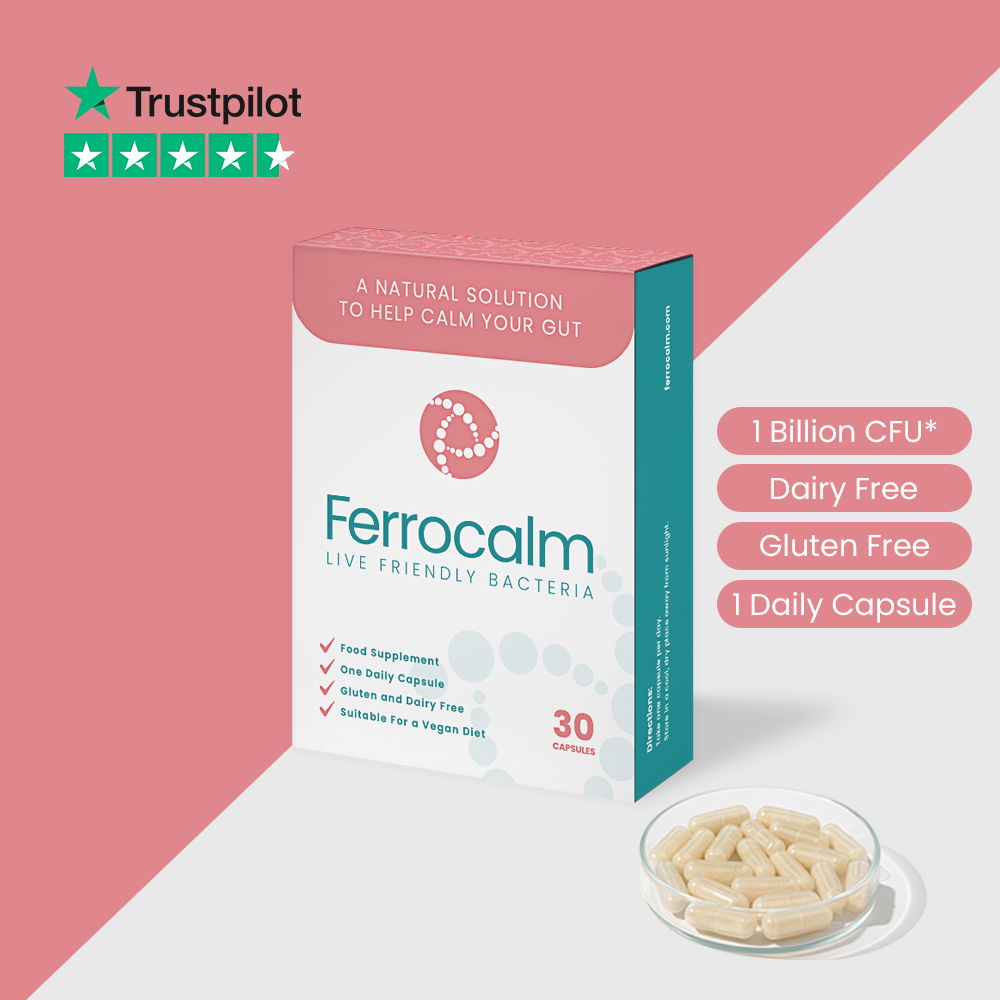
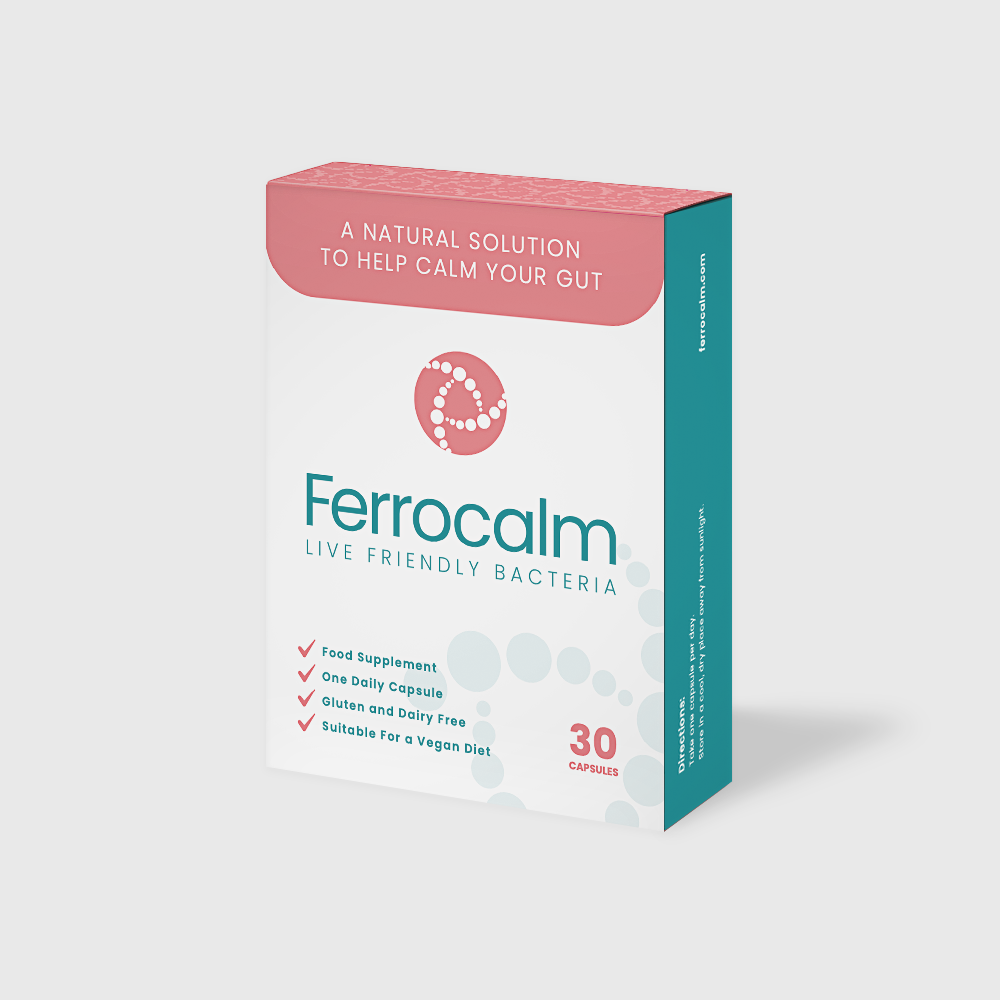
“I had heard of Ferrocalm as I had run wellbeing workshops at their office complex and I saw they were launching at an event,” she says. “I particularly liked that the tablets work even when you are stressed, as my life is fun but busy!”
Since taking Ferrocalm, Nicky says she has noticed subtle but meaningful differences.
“I’ve found subtle differences to my bowel health since taking them. For one, my system is more regular. I used to suffer a lot of constipation and now that’s really rare. I also think I have more energy and I’m very rarely ill.”
Nicky is clear that her progress is not down to one thing alone. It has been a combination of dietary changes, lifestyle awareness, stress management and finding routines that work for her.
“Overall since being diagnosed I have only had four flares of diverticulitis and the latter two have resolved much more quickly. I know that is from a combination of everything I’ve been doing.”
At Ferrocalm, we often talk about IBS because that is where Ferrocalm has been most focused, but we also hear from many customers who use it as part of a wider gut health routine. Nicky’s experience is her own, and Ferrocalm should not be seen as a treatment or cure for diverticular disease. But her story is a powerful reminder that gut health is deeply individual, and that consistent support can look different for everyone.
“Be kind to yourself”
For anyone newly diagnosed with diverticular disease, Nicky’s advice is gentle but practical.
“Firstly I would say be kind to you, take some time to get used to your condition. Everyone is different, so while everyone has a story of what it means to them, your journey will be different.”
She also encourages people to make changes that feel realistic.
“Choose to make some changes that work for you and do what feels right. Do look at your lifestyle and see if there’s any stress points that can be avoided. Do advocate for yourself in restaurants and ask for adjustments.”
Her other practical tip is to get a radar key for accessible toilets.
“Having access to a bathroom takes away a lot of worry.”
Looking ahead
Today, Nicky says that, after all the changes she has made, she often feels healthier than ever.
“I have to say after all these changes I feel the healthiest I’ve ever been, have lots of energy most of the time and as long as my diet is ok I forget I have a condition.”
But she is still working towards fewer flares and less fear.
“I’m still aiming for a time when I don’t get flares at all. I know it’s a ‘condition for life’ but that doesn’t mean flares for life. I’m working to improve my diet, reduce any inflammation, and not let the worry of a flare stop me from living my life my way.”
That last line captures so much of what living with a gut condition can mean.
It is not about pretending it is easy. It is not about finding one perfect fix. It is about learning your body, finding the support that works for you, and refusing to let fear make your life smaller.
Thanks Nicky, for sharing your inside story 💚