
IBS (Irritable Bowel Syndrome) is often spoken about as if it is one single condition. In reality, it is a set of symptoms that can show up in different ways depending on your gut’s patterns, your nervous system, your lifestyle, and what you eat.
If you have ever followed a generic “IBS tip” and felt worse, you are not imagining it. One person’s “eat more fibre” can be another person’s flare-up. One person’s “cut dairy” can do absolutely nothing for someone else. This is exactly why IBS is commonly grouped into four types, based on bowel pattern. Understanding your type can make your next steps feel less random and far more personalised.
If you are also navigating low FODMAP foods and portion sizes, start here: FODMAP Diet Explained: A Simple Guide That Actually Works . It will help you make sense of the terminology without turning eating into a maths exam.
What are the different types of IBS?
- IBS-C: constipation-predominant
- IBS-D: diarrhoea-predominant
- IBS-M: mixed bowel habits
- IBS-U: unclassified / unsubtyped (does not neatly fit the other groups)
These labels are not a judgement. They are simply a practical way to describe your typical pattern, so you can make decisions that suit your body.
IBS in plain English: what is actually going on?
IBS is a long-term condition that affects how your bowel functions and how your gut communicates with your brain (often described as the gut–brain axis). Symptoms typically include abdominal pain, bloating and changes in bowel habit. IBS is also variable: it can flare with stress, after certain foods, around hormonal changes, during travel, and when routine disappears.
This is why the most helpful approach is usually steady, calm and repeatable. When your gut is sensitive, extreme changes tend to backfire. Gentle consistency usually wins.
IBS-C: constipation-predominant IBS
IBS-C usually means constipation is your main pattern and you also get hallmark IBS symptoms like abdominal pain, cramping and bloating.
Common IBS-C symptoms:
- Infrequent bowel movements
- Hard stools and straining
- A feeling of incomplete emptying
- Bloating that builds through the day
- Pain that improves (at least slightly) after going to the toilet
IBS-C: what often helps (gently)
For IBS-C, the goal is usually better motility and comfort without irritating the gut:
- Build routine around the basics: hydration, regular meals, and a consistent morning rhythm
- Consider soluble fibre introduced slowly (rather than suddenly adding lots of roughage)
- Gentle movement after meals can support motility
Watch what makes bloating worse: some high-FODMAP foods can worsen bloating even when constipation is the main issue
If constipation is your dominant pattern, this post may be really helpful: 5 Ways to Prevent IBS Flare-Ups Through Better Gut Health. It focuses on reducing triggers and building consistency, which is often what IBS-C responds to best.
IBS-D: diarrhoea-predominant IBS
IBS-D is when diarrhoea is your main pattern. Many people describe urgency as the most disruptive symptom, particularly socially and professionally.
Common IBS-D symptoms:
- Loose or watery stools
- Urgency (needing a toilet quickly)
- Pain or cramping, often around meals
- Bloating and wind
- Flares triggered by stress, caffeine, alcohol, travel, rich meals, or certain fibres
IBS-D: what often helps (gently)
With IBS-D, the goal is often reducing gut reactivity:
- Keep meals steady and predictable where you can (skipping meals then eating big can aggravate symptoms)
- Identify key triggers: caffeine and alcohol are common, but your personal pattern matters
- Support sleep and stress: when your nervous system is running hot, your gut often follows
Remember portion size: even “healthy” foods can be too much on a sensitive day
IBS-M: mixed IBS (a mix of constipation and diarrhoea)
IBS-M means you fluctuate between constipation and diarrhoea. It can be especially frustrating because you can feel like you are constantly chasing the opposite solution.
Common IBS-M symptoms:
- Alternating stool patterns (sometimes quickly)
- A reactive gut that feels unpredictable
- Bloating, discomfort and cramping that comes and goes
- Food tolerance that varies by stress, sleep, hormones and routine
IBS-M: what often helps (gently)
- When IBS is mixed, stabilising tends to work better than extremes:
- Keep changes simple and trackable: change one thing at a time
- Focus on routine basics first (sleep, hydration, meal timing)
- Low FODMAP can be particularly useful for IBS-M when done properly: short-term reduction, then reintroduction and personalisation
- Avoid over-restricting long-term: the goal is to find your personal triggers, not to live on plain rice forever
If you want a practical low-FODMAP example that still feels like normal life, link this recipe into your week: Low FODMAP Blueberry Muffin Recipe. It is a good example of portion-aware baking.
IBS-U: unclassified / unsubtyped IBS
IBS-U (unsubtyped) means you meet the criteria for IBS, but your stool pattern does not clearly fit IBS-C, IBS-D or IBS-M. Some people with IBS-U have symptoms that are mostly bloating, pain and wind, with less consistent bowel habit changes.
Common IBS-U symptoms:
- Bloating and discomfort as the main complaint
- Pain or cramping that comes and goes
- Wind and digestive “churn”
- Stool changes that are present but not consistent enough to subtype
If this sounds like you, you are not “less valid IBS”. It simply means your pattern may be driven more by sensitivity and gut–brain signalling than by one dominant bowel habit.
How to tell what type of IBS you have (simple and realistic)
- You do not need to track your life for months to get clarity. Try a 1–2 week snapshot:
- On days your gut feels “off”, note whether you tend towards constipation, diarrhoea, or both.
- Note your top two symptoms (bloating, pain, urgency, incomplete emptying).
- Track common triggers: stress, poor sleep, alcohol, caffeine, big meals, new foods.
- Look for the pattern. That is your starting point.
- If symptoms are new, worsening, or come with red flags (bleeding, unexplained weight loss, persistent fever, waking at night with symptoms), speak to a clinician.
Where low FODMAP fits (without the overwhelm)
Low FODMAP can be helpful for many people with IBS, but it works best when done properly. The structured approach is:
- Short-term reduction of high-FODMAP triggers
- Reintroduction to identify what you react to
- Personalisation so you are not restricting more than necessary
The key thing most people miss is that FODMAPs are dose-dependent. Many foods are not simply “good” or “bad” for IBS: they are portion-dependent, and they can also stack across the day.
If you want the simplest starting point, read: FODMAP Diet Explained: A Simple Guide That Actually Works. It will help you understand what you are reducing and why, without fear-based food rules.
How Ferrocalm fits into an IBS routine
IBS routines work best when they are realistic and repeatable. Think of your baseline as:
- steady meal timing
- simple, well-tolerated breakfasts and snacks
- stress and sleep support
- gentle movement
- a calm approach to food that is structured, not fear-based
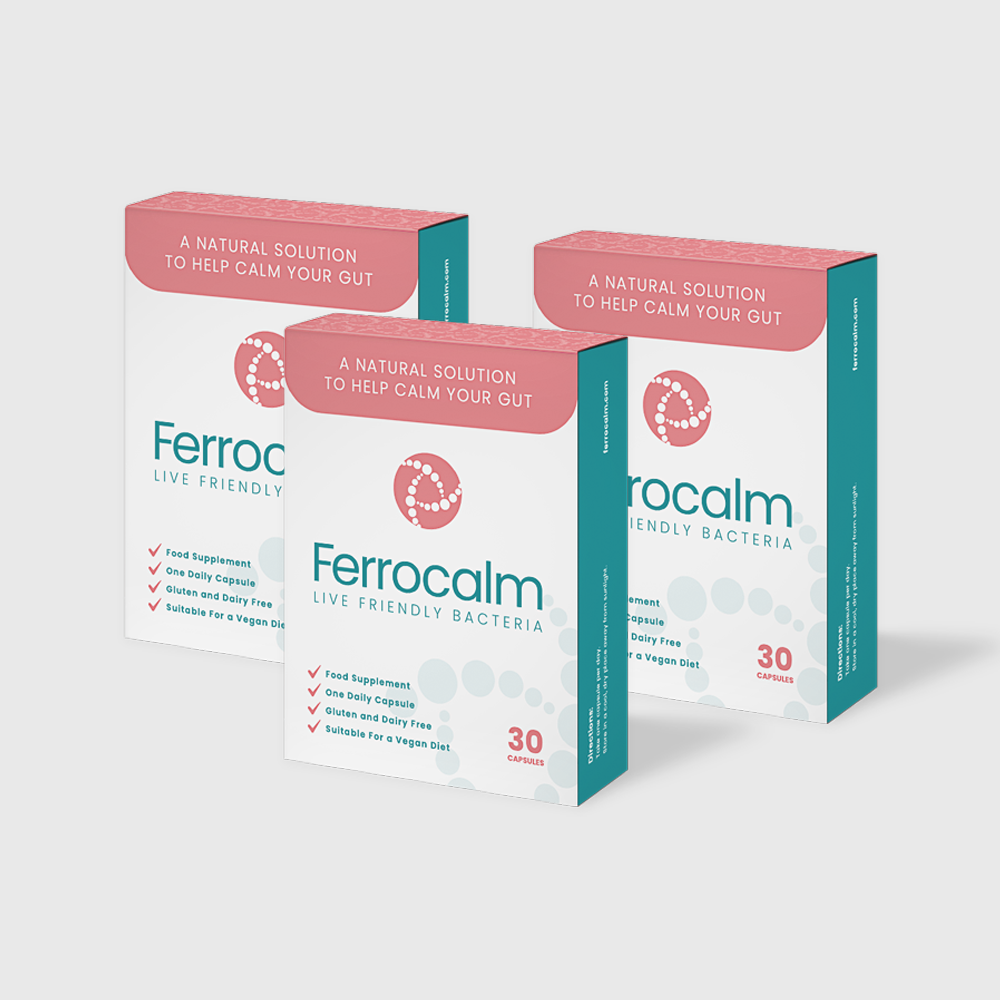
Ferrocalm can sit within that routine as a daily wellbeing habit for people who want a consistent, science-led approach to supporting gut calm. It is not a quick fix, and it is not a substitute for medical advice, diagnosis, or personalised dietary support. But if you are building a routine around steadier digestion, calmer days and fewer “what will my gut do today?” moments, consistency is often the piece that helps.
If you are changing your diet at the same time (for example, trialling low FODMAP), it can help to change one thing at a time so you can actually tell what is making a difference.
FAQs
What is the difference between IBS-C and IBS-D?
IBS-C is constipation-predominant (hard or infrequent stools) and IBS-D is diarrhoea-predominant (loose stools and urgency). Both often include pain and bloating.
What is IBS-M?
IBS-M is mixed IBS. You alternate between constipation and diarrhoea, sometimes within the same week.
What does IBS-U mean?
IBS-U means unclassified or unsubtyped IBS. You have IBS symptoms, but your stool pattern does not fit neatly into C, D or M.
Can your IBS type change over time?
Yes. Many people move between subtypes depending on stress, sleep, hormones, travel, illness, medication and dietary changes.
Is low FODMAP suitable for every type of IBS?
It can help across IBS types, but it works best as a structured process (reduce, reintroduce, personalise). Portion size and stacking matter.
What are common IBS triggers?
Common triggers include stress, poor sleep, alcohol, caffeine, large or fatty meals, and specific carbohydrates (FODMAPs). Your triggers are individual, so tracking patterns helps.
How do I stop IBS flare-ups?
There is rarely one magic fix, but routine basics (sleep, meal timing, hydration, stress support) and identifying triggers are the strongest foundation. Our guide is a useful next step.