
Christmas - the most wonderful time of the year. But if you live with IBS (irritable bowel syndrome) or struggle with gut health issues, it can feel like the most unpredictable and stressful time of the year. A month full of fun social gatherings, celebration and comfort food suddenly becomes a, difficult to manage combo of buffet tables, disrupted routines, alcohol, stress, and the fear of a very inconvenient IBS flare-ups during a family outing.
While everyone else enjoying the mince pies, mulled wine and endless amounts of cheese, you might be doing quiet calculations in your head. What can I eat? What should I avoid? How far away is the nearest bathroom? Why did I agree to this again?
If you live with irritable bowel syndrome, whether that is IBS C, IBS D, IBS M or IBS U, Christmas comes with a unique set of challenges. From food triggers to stress driven flare ups, it is a time of year when your gut can feel a bit more sensitive and reactive than usual.
Let us take a friendly, honest look at why Christmas is so hard on the gut and what you can actually do to make the season calmer, more enjoyable and much more IBS friendly.
Why Christmas Can Trigger IBS Symptoms
1. The rich food - delicious, but dangerous.
Christmas often feels like it is all about the food.Which is really tricky for anyone with IBS. The festive season revolves around meals that are creamy, buttery, spiced, sweet, fried or full of onion and garlic. These foods are known to aggravate the symptoms of IBS and can cause diarrhoea, constipation, bloating, abdominal pain and, let's face it, misery.
Common IBS Christmas triggers include:
- Stuffing with onion and garlic
- Heavy creamy sauces
- Brussels sprouts and other gas inducing veg
- Mince pies and dried fruit
- Pastry
- Christmas pudding
- Alcohol, especially mulled wine and sugar-filled Prosecco
Even foods that would normally be fine can become a problem when mixed together or eaten in larger portions. This is known as FODMAP stacking and it is very common during the festive period.
2. Alcohol consumption increases
A small glass of wine is one thing. Christmas drinking is an entirely different sport. Alcohol is a known gut irritant. It affects the gut lining, can loosen the stool, increase diarrhoea, worsen constipation, and cause painful bloating.
Add sugary mixers, spice mixes, bubbles, and drinking on an empty stomach and you have the perfect recipe for a stressed gut.
3. Crowds, noise and social pressure increase stress
We talk a lot about food when it comes to IBS, but stress is one of the biggest triggers of all. The gut brain axis means your digestive system responds directly to your emotional state. If you feel overwhelmed, anxious, overstimulated or a little bit burnt out, your gut often reacts.
Christmas comes with:
- Packed social calendars
- Family obligations
- Financial pressure
- Gift shopping - in the busiest time of year
- Travel
- Crowded supermarkets
- An expectation to be cheerful
Stress gut is very real and those with irritable bowel syndrome feel it particularly strongly. Even small stressors can push your digestive system into fight or flight which can mean cramps, urgency, bloating or constipation.
4. Routine goes out the window
IBS thrives on routine. Christmas thrives on chaos. Late nights, irregular meals, overeating, under eating, trying new foods, skipping water, forgetting your supplements and getting less movement all add up.
If you normally rely on a predictable bathroom schedule, Christmas can feel like someone has flipped your internal clock upside down.
5. The fear of symptoms can make symptoms worse
If you have ever worried so much about having a flare up that you accidentally caused one (the vicious circle), you are not alone. Anticipatory anxiety is a huge part of IBS management. At Christmas, when bathrooms may be further away and social events often last for hours, this anxiety rises.
Unfortunately, the fear of symptoms can activate the gut brain axis and trigger the very symptoms you were trying to avoid.
The Emotional Side of IBS at Christmas
People often underestimate the emotional work involved in managing IBS.
There is:
- The embarrassment of symptoms
- The frustration of not eating the same things as everyone else
- The guilt of saying no to food someone made for you
- The worry about judgement or misunderstanding when you need to step away
- The isolation of feeling like the only one who cannot just relax and enjoy it
IBS is not just a digestive condition. It affects confidence, social life, relationships and your sense of control. Christmas can amplify those feelings, especially when people around you do not understand what it is like to plan your entire day around gut health.
If this is you, you are not dramatic. You are managing a genuine health condition in a season that is genuinely challenging.
How to Navigate Christmas With IBS: Practical Tips That Actually Help
Here are some friendly, realistic ways to make Christmas calmer for your gut and your mind.
1. Know your IBS type and plan around it
- IBS D often needs lower fat, lower spice and lower sugar options.
- IBS C usually benefits from more hydration and gentle fibre.
- IBS M and IBS U need balance and avoidance of FODMAP stacking.
Knowing what aggravates your type means you can make smarter swaps.
2. Do not arrive at meals starving
This is one of the biggest Christmas mistakes. If you show up hungry, you are far more likely to overload on trigger foods.
Eat a gut friendly breakfast such as:
- Porridge with blueberries
- Eggs and sourdough
- Rice cakes with peanut butter
It keeps your gut calm and helps you stay in control.
3. Swap trigger foods for easier alternatives
You do not need to miss out. A few simple swaps can make a huge difference:
- Make low FODMAP gravy
- Swap sprouts for carrots or green beans
- Choose gluten free stuffing
- Pick sorbet, meringue or berries over heavy puddings
- Choose cranberry mocktail over mulled wine if sensitive to alcohol
4. Pace yourself
Eat slowly. Chew properly. Take breaks.
This helps activate the rest and digest response which is essential for IBS relief.
5. Support your gut with a targeted probiotic
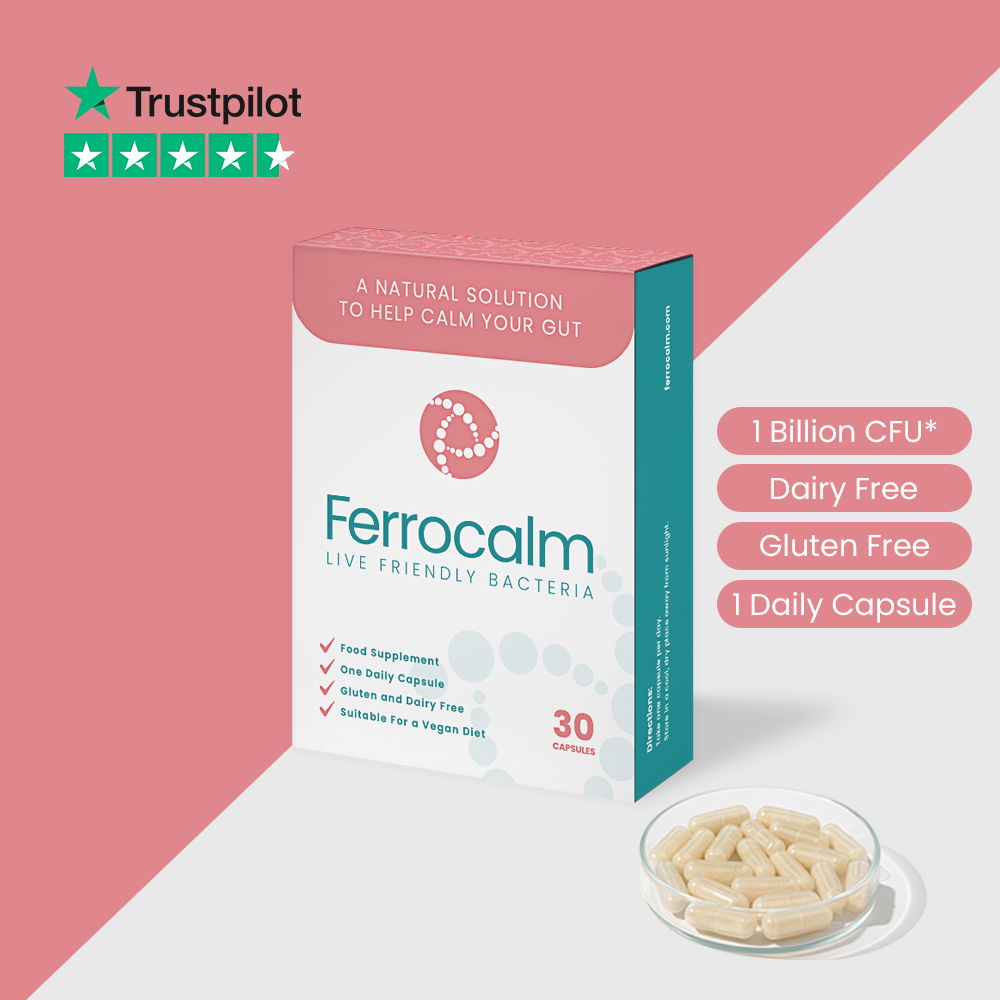
A science led probiotic designed for IBS and flare ups can help support gut balance during the most challenging time of year. Ferrocalm in particular contains a strain that is built to work even during stress triggered flare ups and active inflammation. Many users report better digestion, calmer symptoms and fewer flare ups when taken daily throughout the season.
6. Manage stress before it manages your gut
Little habits can make a big difference:
- Take a 10 minute walk after meals
- Step outside for fresh air
- Practise deep breathing before big meals
- Set boundaries around what you say yes to
- Take quiet time when needed
7. Do not be afraid to say no
You are not being awkward. You are protecting your gut health. It is perfectly acceptable to bring your own food, politely decline certain dishes or explain that you are managing IBS.
8. Have a flare up plan
A small kit can help you feel calm and prepared:
- Heat pad
- Water bottle
- Safe snacks
- Medication if prescribed
- Ferrocalm
- A quick exit strategy
Even knowing you are prepared can reduce anxiety and prevent symptoms.
The Bottom Line
Christmas with IBS is not easy, but it is absolutely possible to enjoy without spending it in fear of your gut. With the right swaps, routines and support, you can have a calmer, more comfortable and more confident festive period.
You deserve to enjoy Christmas just as much as everyone else. Your gut just needs a little more care, a little more planning and a lot less pressure. And that is completely OK.
If you want extra support for your gut during the Christmas season, you can learn more about Ferrocalm and how it helps IBS symptoms, flare ups and stress gut here.