
After more than 20 years of gut problems, Nic was used to severe reactions affecting her for days. Then, on a family holiday, she noticed something very different.
IBS, diverticular disease, non-coeliac gluten sensitivity and a dairy-free diet have meant that food has rarely been simple for Nic. If you happen to her on Instagram (and if you don't you should!) - @chronically_musing_along, you'll know that she talks openly about the reality of living with chronic health conditions and gut problems.
What a journey! And hardly a straightforward one - it has involved years of symptoms, investigations, dietary changes and learning through trial and error what her body can and can't tolerate.
It all started two decades ago...
"The doctor put it down to IBS and told me to keep a diary."
Nic's gut problems began over 20 years ago, around the same time she was diagnosed with the autoimmune condition pernicious anaemia.
"I was struggling a lot with nausea, bloating and a mix between constipation and diarrhoea. The doctor put it down to IBS and told me to go away and keep a diary."
Nic began loosely tracking foods she thought might be causing problems, with pork and wheat among the early suspects. Like many people trying to navigate gut symptoms without clear answers, though, it took time to understand what her body was reacting to.
"I didn't really know much about gluten and just thought it was wheat only. I didn't particularly take it too seriously and would often break the diet and feel horrific afterwards."
Eventually, Nic removed gluten from her diet completely. Some symptoms improved, but they didn't disappear. She still felt there was more going on so she pushed for further investigations, including blood tests, an endoscopy and a colonoscopy.
The colonoscopy confirmed diverticular disease.
"I was given a leaflet and sent on my merry way, so that's been a slow learning process!"
She has since experienced diverticulitis requiring antibiotics and continues to learn how best to manage the condition.
Testing for coeliac disease came back negative, despite Nic experiencing significant reactions to gluten cross-contact. Her gastroenterologist subsequently diagnosed non-coeliac gluten sensitivity and advised her to continue following the strict gluten-free diet that was helping her. Today, Nic says she effectively lives as someone with coeliac disease would, taking cross-contact seriously and checking how food is prepared. In an unexpected twist, her son was diagnosed with coeliac disease this year.
"I do feel like I was meant to go through my own journey, as his transition to a gluten-free diet has been a bit of a breeze and he's taken to it so well!"
After having her son, another piece of the puzzle emerged. Her baby had a severe cow's milk protein allergy and was reacting through Nic's breast milk, so she was advised to remove milk completely from her own diet. After approximately a year dairy-free, she attempted to reintroduce it.
"I was shocked at how badly I reacted – and this was after one Cadbury's Hero!"
Several attempts to reintroduce dairy resulted in similarly severe symptoms, so Nic's dairy-free life continued too. Removing gluten and dairy has helped enormously, but it hasn't meant the end of her gut problems - there's still IBS to contend with.
"Even after all this time, it's still a learning curve."
Stress can be a significant trigger for Nic, alongside foods and drinks including greasy foods, caffeine, sweets, fizzy drinks, Prosecco and wine, so at home, she has developed a repertoire of "safe" meals she knows she can rely on. But when it comes to eating elsewhere, a lot of reseach must be done! Holidays mean researching reviews and emailing hotels before travelling. Restaurants require questions about preparation, shared fryers and utensils.
"If you're a safe option, you can be sure I'll visit and tell all of my friends!"
And there's a very good reason Nic is so careful. When a flare does happen, it can be debilitating.
"I bloat to nearly the size I was full term with my son."
Nic describes reactions that can involve extreme and tender bloating, a tight feeling in her throat, reflux and heartburn, nausea, vomiting, severe cramps and diarrhoea. And if you suffer like Nic, you'll know it doesn't necessarily end when the immediate gut symptoms subside.
"I feel absolutely wiped for quite a few days afterwards. The longest I've found reactions have been around 10 days to two weeks."
There's also a huge mental impact.
"The anxiety that follows can become quite consuming too, as you rack your brains as to what it was or how it happened."
It's this combination of physical symptoms and constant anticipation that can make living with gut problems so restrictive.
Then Nic tried Ferrocalm
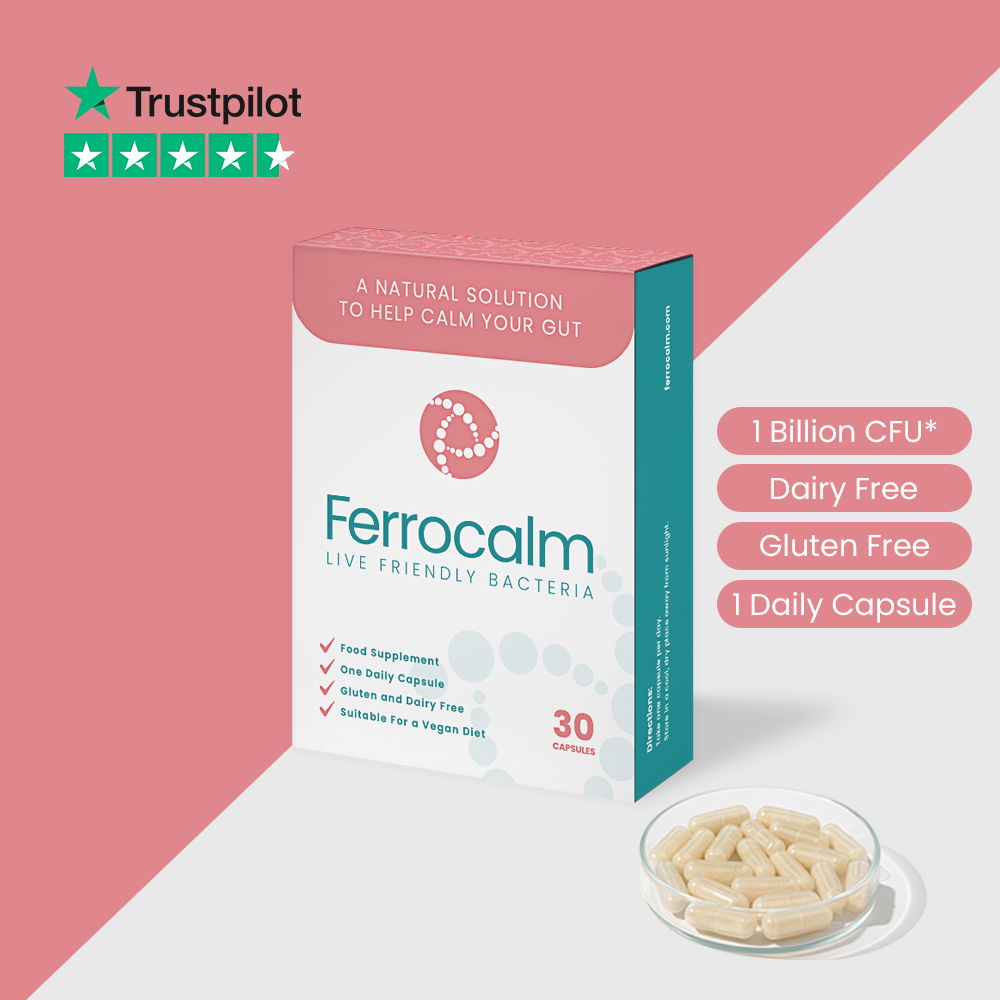
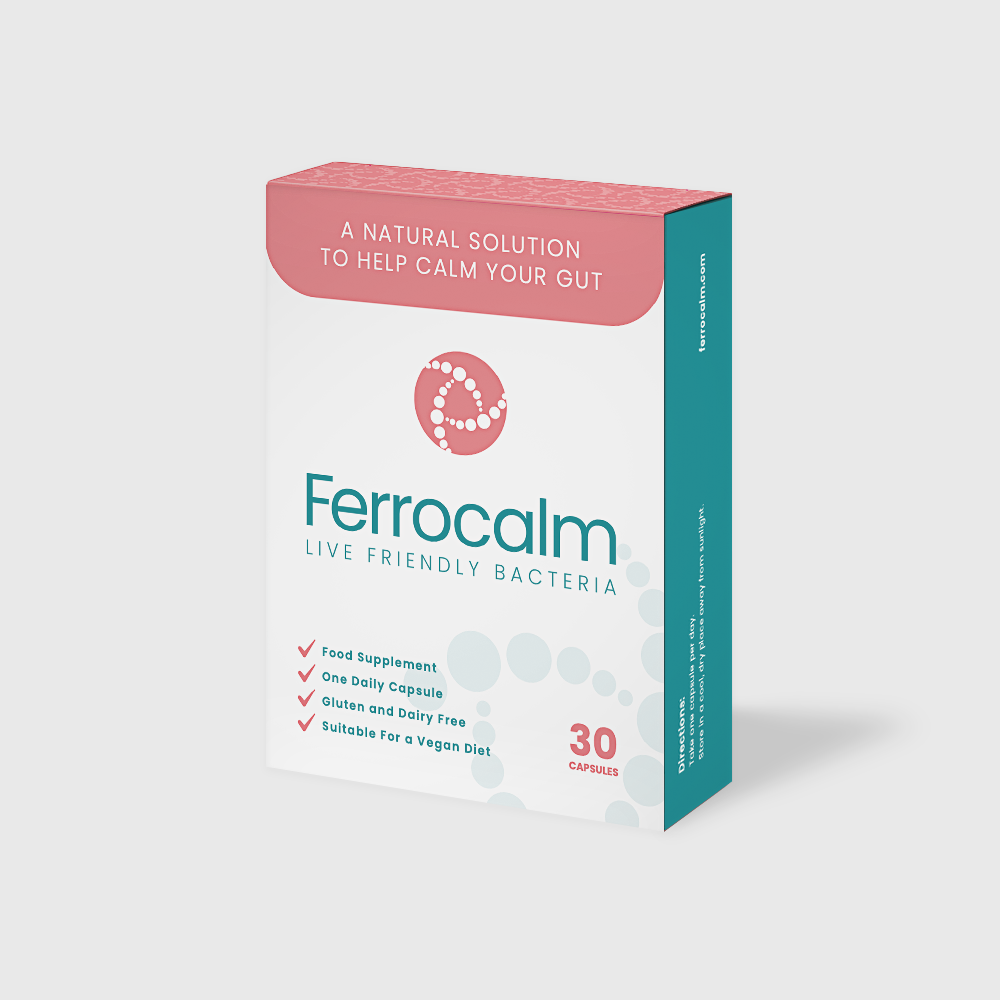
We recently sent Nic Ferrocalm to try, with no expectation other than for her to see how she got on. She began taking it shortly before heading away on a family camping holiday - precisely the sort of situation where her normal routine changes and a few more treats tend to creep in. And within a little over a week, she noticed something.
"I'd had a few Candy Kittens, which, as much as I love them, my gut hates the sugar. However, I didn't immediately bloat or feel sick!"
Then came a few G&Ts at the bar.
Again, the reaction she'd normally anticipate didn't arrive with anything like the same intensity.
For Nic, the timing couldn't have been better.
"It was an insane relief as we were camping. The last thing I want to be dealing with is diarrhoea when on a campsite, no matter how lovely the toilet block is!"
It's still early in Nic's Ferrocalm journey, but she describes the difference so far as "fab", telling us that her reactions have "definitely reduced a lot."
She's also noticed something slightly more unexpected: a little more gas, but, as she puts it, in a strangely relieving way!
Gut health isn't about perfection
Ferrocalm hasn't suddenly made Nic abandon everything she's learnt about managing her gut. She still knows her triggers. She maintains the dietary restrictions she needs. And if a flare does happen, she reaches for the simple things that have helped her over the years: hot water bottles, peppermint tea and, importantly, being kind to herself.
Her advice to anyone going through it?
"I totally get it, the frustration, the anxiety, the 'why me?' It sucks."
But she also wants people to know that life doesn't have to become smaller because of it.
Free-from options have improved. There are restaurants and businesses that take dietary requirements seriously. And she's found a community of people online who genuinely understand what it's like.
Most importantly, she says:
"Advocate for yourself and don't apologise."
After years of learning, adapting and advocating for herself, Nic is still figuring out her gut. But if being able to treat herself on a family camping holiday without the reaction she had spent years expecting is a sign of what's to come, we'll certainly be following along.
And hopefully there'll be plenty more Candy Kittens along the way (and the odd G&T)