
2025 was all about proactive, personalised, and preventative healthcare, driven by technological advancements and the necessity to address long-term conditions - like Irritable Bowel Syndrome (IBS). Gut health remains one of the biggest health and wellness trends entering 2026, and it is no longer a niche topic, but more of a holistic view of the whole body and how the microbiome supports more than just what's going on in your gut.
But what does this mean for those that live with IBS? We have created this simple guide to what to expect in 2026 when it comes to your gut health to help break through the noise and and focus on tangible takeaways that you can start today to help ease symptoms and lead a more healthier life on the whole.
The conversation is shifting from generic “take a probiotic” advice to something far more useful: targeted, science-backed support that works in real-life conditions (stress, flare-ups, inflammation). This is the exact reason Dr Jenny Bailey Cooper created Ferrocalm and our science story is unusually relevant to the 2026 trend landscape.
1. More People See Gut Health as Whole‑Body Health
From skin, hair and nails to mental health and even type 2 diabetes, obesity, and certain autoimmune disorders, the health of your microbiome is integral to overall well-being. This trend reveals that a majority of global consumers, 59%, are increasingly choosing functional ingredients, such as probiotics and prebiotics, to support both physical and mental health and see gut health as a path to holistic wellness.
Why that matters if you have IBS
If you live with IBS, you already know your gut isn’t operating in isolation.
- A stressful week can mean a flare-up.
- Poor sleep can mean more sensitivity
-
Hormones, routine changes, travel, busy work days… all of it can show up in your gut.
So when you hear “gut health = whole-body health”, it’s basically a trend label for what IBS sufferers have experienced for years: your gut reacts to your life, not just what you may have eaten that day.
What it means for IBS sufferers in practical terms
This trend creates two realities:
-
More useful options (the good bit)
You’ll see more products and routines designed around real life, things that talk about calm, comfort, resilience, consistency, and supporting you through “normal chaos” (stress, social plans, disrupted routines). -
More ‘gut’ marketing everywhere (the annoying bit)
Because “gut health” is now mainstream, lots of brands will put “gut-friendly” on packaging. For IBS sufferers, that can be frustrating and confusing.
Where Ferrocalm fits
Ferrocalm sits neatly in this 2026 shift because it’s designed around the IBS reality: flare-ups often happen when life is stressful, inflammatory, and unpredictable.
Rather than being a vague “gut blend”, Ferrocalm is built around a specific strain (Streptococcus thermophilus FX856) and positions itself as daily gut support that’s formulated with the flare-up environment in mind (stress/inflammation conditions).
2. Fibre, Fibre, Fibre
A notable trend gaining global momentum is “fibremaxxing” prioritising higher, diverse plant fibre intake to feed microbiome diversity and support long‑term gut health. In fact, FoodNavigator flags fibre emerging as “the new protein” in 2026 product development. Obviously, fibre is a type of carbohydrate, not a protein, so this "trend" is more about fibre being the"unsung hero" nutrient that has been overshadowed by protein for years and offers significant, science-backed health benefits that most people are not meeting.
What is Fibremaxxing?
Fibremaxxing, simply put, is where you add more fibre-rich foods to your daily diet, such as fruits, vegetables, lentils, beans, nuts, seeds, and whole grains. The aim is to meet or exceed the daily recommended allowance (around 30 grams for adults in the UK) to support overall health.
How this trend could impact those with IBS
More fibre is not automatically better for every IBS gut and sudden increases can worsen symptoms. We would always advise gradual changes when it comes to introducing more fibre to your diet and always keep a track of your symptoms to find the right balance for you.
Where Ferrocalm can help
Fibre trends are about feeding the ecosystem; Ferrocalm is about supporting gut calm when the ecosystem is under pressure. Think "build day-to-day resilience” plus “have a strategy for flare-up conditions.” So you have all bases covered.
3. Next Gen-Biotics
For years, “probiotics” have been a bit of a catch-all label. In 2026, the trend is moving towards more specific, more transparent gut support, because people are realising not all gut products are the same.
You’ll see more talk about different “biotics”, which is just shorthand for different ways of supporting your gut:
- Probiotics = live friendly bacteria (the “bugs”)
- Prebiotics = the food that helps friendly bacteria grow (usually certain fibres)
- Postbiotics = helpful compounds bacteria make (think of them as the “results” or “by-products”)
- Synbiotics = a combo of probiotics + prebiotics
The 2026 shift is basically: less vague “gut blend” marketing, more clarity about what something is and what it’s actually designed to do.
What you actually need to know if you have IBS
If you have IBS, this is important because it explains why you might have tried probiotics before and thought: “Why didn't this work for me?"
In reality, probiotics may help some people with IBS, but not everyone, and results vary depending on the product. If you want to try one, it’s sensible to try one product at a time and take it daily for at least 4 weeks, then decide if it’s worth continuing.
So in 2026, “next-gen” gut support is really about choosing products that are specific and testable, so you can actually tell if they’re helping your gut.
How Ferrocalm can help
A lot of probiotics are designed for a gut that’s already fairly calm. But IBS isn’t always calm and flare-ups often show up during stress, inflammation, disrupted routines, travel, or trigger meals.
Ferrocalm’s whole point is that it’s designed around that reality.
Ferrocalm uses a single named strain: Streptococcus thermophilus FX856 (rather than a “probiotic blend”). Think quality over quantity.
FX856 can stay active in tougher gut conditions, including higher-iron environments that can happen during stress or flare-ups.
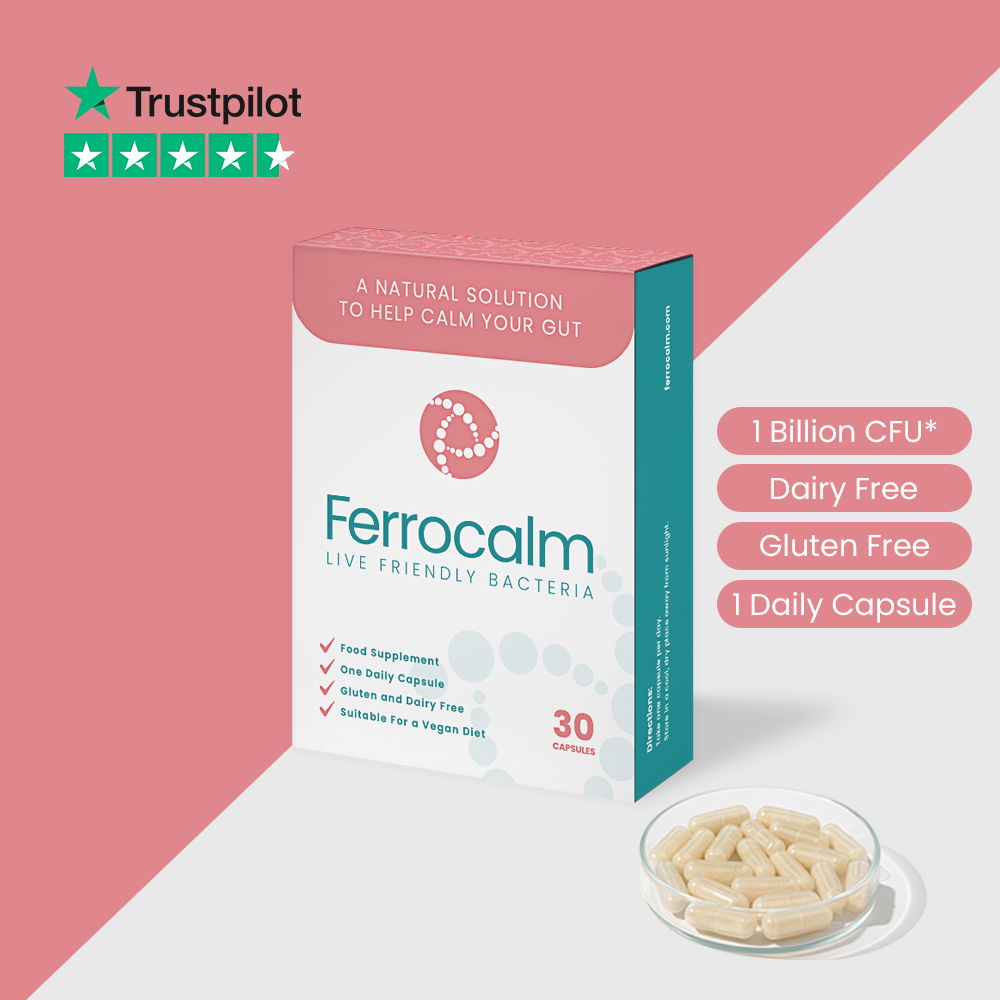
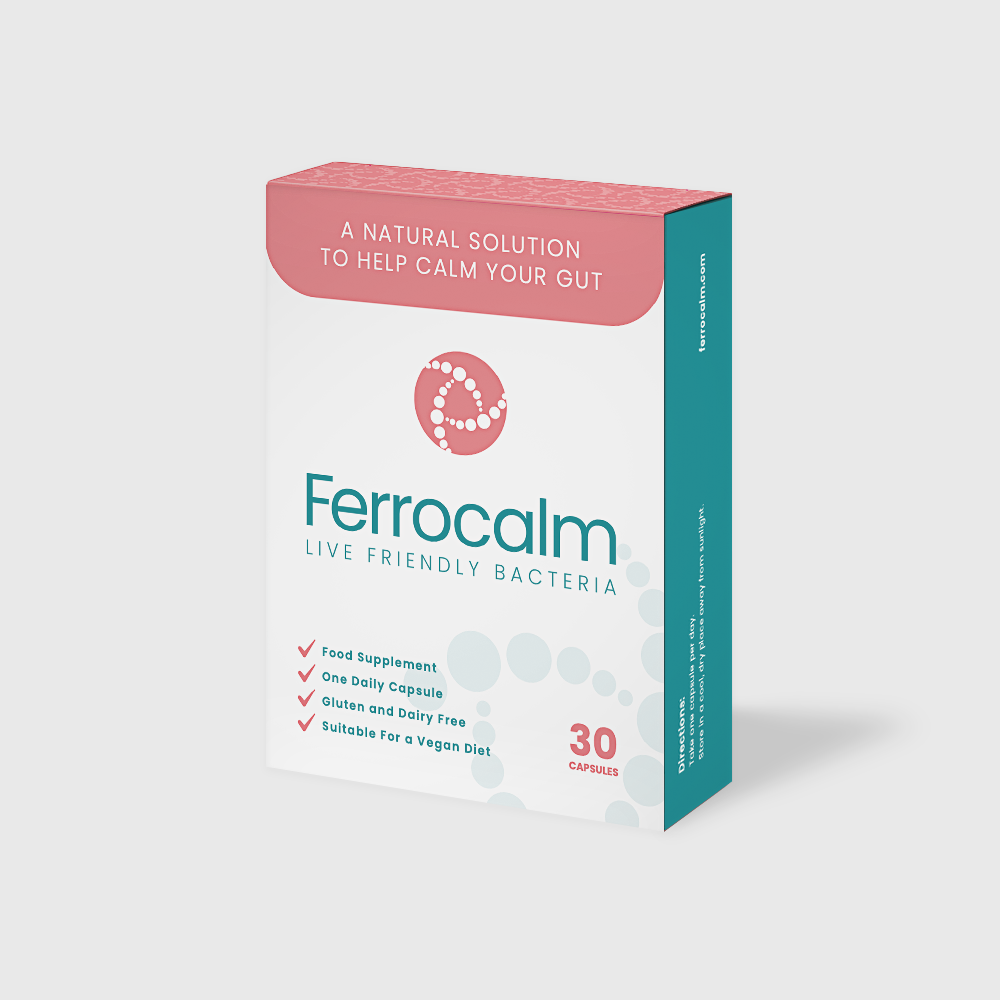
Each capsule contains 1 billion CFU and the strain was identified through University of Bristol-linked R&D, per Ferrocalm’s own materials.
One of the reasons Ferrocalm resonates with IBS sufferers is that it wasn’t created by a generic wellness brand.
Ferrocalm’s founder and CEO, Dr Jenny Bailey Cooper, earned her PhD in Mucosal Immunology from the University of Bristol (2008) and has 18+ years of gastrointestinal disease research experience, and she led the development of Ferrocalm from research to launch. Jenny has lived with IBS herself, which is why Ferrocalm was created specifically for IBS sufferers and “real life” (flare-ups, stress, disruption) rather than perfect-routine wellness.
Because when it comes to your gut, it helps when the person building the science also understands the lived experience.
4. Personalisation at scale: quizzes, testing, and AI-driven microbiome insights
Love it or hate it, AI is everywhere, including the gut health world. As more and more people are searching for a more tailored approach to their gut health, AI is being used to meet this demand. AI is also being used when it comes to microbiome data, particularly machine learning and deep learning, providing the necessary computational power and algorithms to find patterns and correlations within these massive datasets that would be difficult for humans to identify otherwise.
What this means for those with IBS
AI systems can analyse an individual's unique gut microbiome data to recommend a personalised diet, which has shown in pilot studies to be more effective at reducing symptoms than a standard low-FODMAP diet. In essence, AI is making IBS care more accessible, objective, and personalised, bridging gaps in conventional healthcare delivery and offering new avenues for symptom relief.
How Ferrocalm fits in
At Ferrocalm we have been beating the "one size doesn't fit all" drum for a whole now and would highly recommend a personal approach to managing your symptoms. We offer a Gut Health Quiz that can help you identify your symptoms and discover which type of IBS you may have.
We are constantly exploring new ways to evolve Ferrocalm and rely heavily on data to do this.
5. Gut health is being positioned as whole-body health, not just digestion.
We are genuinely over the moon that gut health is going mainstream as not only does it mean there will be more solutions out there for people who suffer, but it also means there will be less of a stigma attached to conditions like IBS, as more and more people are talking about their issues.
You’ll see more products claiming to help with bloating, gas, “comfort,” and balance. The key skill in 2026 will be separating marketing from mechanism: strain specificity, clinically relevant dosing, and realistic outcomes.
What this means for those with IBS
More products for those with conditions like IBS, in reality, seems like a good thing, however, we also run the risk of getting overwhelmed with what will work on a personal level - which can get expensive, fast! The amount of gut health products is already quite overwhelming, so slapping "good for your gut" stickers on even more products could make it even more tricker to find out what will work for you.
How Ferrocalm can help
Ferrocalm is positioned around a single, named strain — Streptococcus thermophilus FX856 — rather than a generic multi-strain blend, and explicitly targets the “flare-up environment” problem (inflammation/stress). No complex routines, just one capsule, once a day - with or without food - whenever it suits you! Plus, after 90 days, if you don't see any improvement in your symptoms we will give you your money back.
Source
https://www.innovamarketinsights.com/trends/top-food-and-beverage-trends-2026/
https://www.nutritioninsight.com/news/gut-health-hub-innova-market-insights-2026-top-trend.html
https://www.foodnavigator.com/Article/2025/12/11/food-trend-predictions-2026/
https://www.foodnavigator.com/Article/2025/12/11/gut-health-innovations-shaping-nutrition-in-2026-and-beyond/
https://www.wholefoodsmarket.com/trends/the-next-big-things-our-top-8-food-trend-predictions-for-2026
https://media.wholefoodsmarket.com/whole-foods-market-forecasts-the-top-food-and-beverage-trends-for-2026/
https://www.foodandwine.com/food-trends-for-2026-from-experts-11871415
https://www.nationalgeographic.com/travel/article/the-biggest-food-trends-for-2026
https://www.marksandspencer.com/food/content/top-food-trends
https://khni.kerry.com/trends-and-insights__trashed/key-health-and-nutrition-trends/
https://clasado.com/prebiotic-trends-in-2026/https://www.nhs.uk/tests-and-treatments/probiotics/
https://www.bda.uk.com/resource/irritable-bowel-syndrome-diet.htmlhttps://journals.plos.org/plosone/article?id=10.1371/journal.pone.0026507
https://pubmed.ncbi.nlm.nih.gov/22039501/
https://pubmed.ncbi.nlm.nih.gov/28618865/
https://www.eurekalert.org/news-releases/981488
https://www.infectionimmunity.co.uk/articles/ibd-ibd-scientists-the-university-of-bristol-study-the-anti-inflammatory-potential-of-the-novel-streptococcus-thermophilus-strain-ncimb-41856/
https://www.wageningenacademic.com/doi/full/10.3920/BM2016.0110